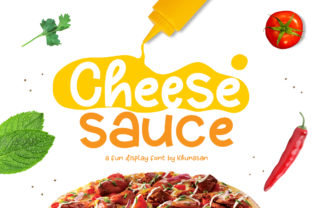
Cheese Sauce: A Cheerful Addition to Your Workflow
Cheese Sauce is more than just a fun display font—it's a versatile tool that can bring a touch of personality and clarity to your projects. Whether you're designing a presentation, crafting content, or organizing information, Cheese Sauce offers a unique visual style that stands out while maintaining readability. Its cheerful aesthetic makes it ideal for creative workflows where a friendly tone is essential.
Understanding Cheese Sauce in the Broader Process
Cheese Sauce fits naturally into a variety of processes, from initial planning to final execution. It’s particularly useful when you need to convey information in a way that feels approachable and engaging. For instance, in marketing campaigns, Cheese Sauce can be used to highlight key messages or create eye-catching headlines that resonate with a broad audience.
In educational settings, it can help break up dense text and make learning materials more accessible. For entrepreneurs and small business owners, using Cheese Sauce in branding or promotional materials can add a distinctive flair that sets their work apart from competitors.
Using Cheese Sauce Before, During, and After a Project
Before starting a project, Cheese Sauce can be used to outline ideas or structure thoughts. Its bold and playful appearance makes it an excellent choice for brainstorming sessions or mind mapping exercises. By incorporating it into early-stage planning, you can visually organize concepts and ensure a clear direction for the work ahead.
During the execution phase, Cheese Sauce can be applied to headings, subheadings, or callout sections to guide readers through complex content. It works well in blogs, reports, and digital presentations where visual hierarchy is important. When used strategically, it helps maintain attention and improves overall comprehension.
After completing a task, Cheese Sauce can be used to summarize key points or reinforce takeaways. In newsletters, email campaigns, or social media posts, it adds a friendly tone that encourages engagement and builds a connection with the audience.
Integration with Other Tools and Methods
Cheese Sauce pairs well with other design tools and platforms. It integrates smoothly with graphic design software like Adobe Illustrator, Canva, and Figma, allowing for seamless creation of visuals. When combined with typography best practices, it enhances the overall aesthetic without overwhelming the reader.
In collaborative environments, Cheese Sauce can be part of a shared design system, ensuring consistency across team projects. It works alongside other fonts, colors, and layouts to create cohesive and professional outputs. For teams working on brand identity, it provides a recognizable element that reinforces brand messaging.
When used in conjunction with content management systems (CMS) or website builders, Cheese Sauce can be easily implemented through custom CSS or font libraries. This makes it accessible even for those with limited design experience, allowing them to enhance their digital presence without significant technical barriers.
Practical Implementation Tips
To get the most out of Cheese Sauce, start by identifying where it will have the greatest impact. Use it sparingly to avoid visual clutter. A well-placed heading or subheading in Cheese Sauce can draw attention without distracting from the main content.
Consider the context in which it will be used. For formal documents or professional communications, a more subdued application may be appropriate. In contrast, for creative or casual projects, you can experiment with bolder uses to reflect the tone of the work.
Test different sizes and weights to find the right balance between visibility and readability. Ensure that it complements the surrounding text and doesn't interfere with the overall flow of information. When used in digital formats, check how it renders on various devices to maintain consistency across platforms.
Workflow Examples and Observations
For a content creator working on a blog post, Cheese Sauce can be used for section headers to make the structure clearer. This not only improves the visual appeal but also helps readers navigate the content more efficiently.
A marketer preparing a product launch might use Cheese Sauce in social media graphics to emphasize key features or benefits. The font’s cheerful style aligns well with positive messaging, making it an effective tool for attracting attention and driving engagement.
In a classroom setting, a teacher could incorporate Cheese Sauce into handouts or slides to make lessons more engaging for students. Its friendly look can reduce the intimidation factor of complex topics and encourage a more relaxed learning environment.
Factors to Consider for Long-Term Use
When integrating Cheese Sauce into long-term workflows, consider its compatibility with future updates and changes. Ensure that it remains accessible as design trends evolve. Regularly review its effectiveness in your specific use cases to determine if adjustments are needed.
Consistency is key when using any font over time. Establish guidelines for when and how Cheese Sauce should be applied to maintain a cohesive look across all materials. This is especially important for businesses or organizations that rely on a strong brand identity.
Quality control is another important aspect. Monitor how Cheese Sauce performs in different formats and environments. If issues arise, such as poor rendering on certain devices, explore alternatives or adjust the implementation strategy accordingly.